Sony Xperia 1 VIII — May 13 Launch Date Is Official
Sony just made it official. The Sony Xperia 1 VIII launches May 13, dropping into a flagship cycle that’s more crowded and more AI-obsessed than ever. Google is pushing Gemini into everything. Samsung has Galaxy AI baked into every corner of One UI. Apple’s doubling down on Apple Intelligence. And Sony? Sony is doing Sony — doubling down on display quality, manual camera controls, and hardware-first thinking. That’s either principled differentiation or willful stubbornness, depending on where you stand. This article takes a hard look at both possibilities.
What We Know About the Xperia 1 VIII Specs So Far

On paper, the Xperia 1 VIII specs look exactly like what you’d expect from a 2026 Sony flagship — which is mostly a compliment, with caveats.
The chipset is almost certainly the Snapdragon 8 Elite, same silicon powering the Galaxy S25 series and the OnePlus 13 (Qualcomm Snapdragon 8 Elite product page). That puts it in the top tier for raw performance. Leaked configurations point to 12GB RAM as the base, with a 512GB storage option expected at launch. No microSD this time around, if recent Sony trends hold.
The display is shaping up to be a 6.5-inch 4K OLED panel with a 120Hz refresh rate — same basic formula as the Xperia 1 VII. That 4K resolution is still Sony’s biggest flex. No other flagship matches it. The Galaxy S25 Ultra runs at 3088 x 1440. The Pixel 9 Pro tops out at 2992 x 1344. Sony’s pixel density lead is real.
InsiderXP Fact: The Sony Xperia 1 VIII is expected to feature a 6.5-inch 4K OLED display at 120Hz — the only flagship-class smartphone in 2026 to offer true 4K resolution, giving it a pixel density lead over the Galaxy S25 Ultra and Pixel 9 Pro.
Where Sony trails? Battery and charging remain question marks. Leaks have been suspiciously quiet on both. The Xperia 1 VII shipped with a 5,000mAh cell and only 30W wired charging — embarrassingly slow by 2025 standards, let alone 2026 (Sony Xperia 1 VII official specs). If Sony ships the VIII with the same charging ceiling, that’s not a quirk. That’s a problem.
The Redesign Is Real — Here’s What’s Actually Changing
The Reddit threads and YouTube first-look videos are treating the Xperia 1 VIII’s redesign like a revelation. Let’s calibrate expectations.
The renders circulating show a device that’s slightly wider and shorter than the Xperia 1 VII — a meaningful shift from Sony’s famously tall, narrow form factor. Dimensions reported by GSMArena and others suggest roughly 156 x 71mm, compared to the VII’s 162 x 74mm. The device is getting more conventional in proportions. Whether that’s a win depends entirely on who you ask.
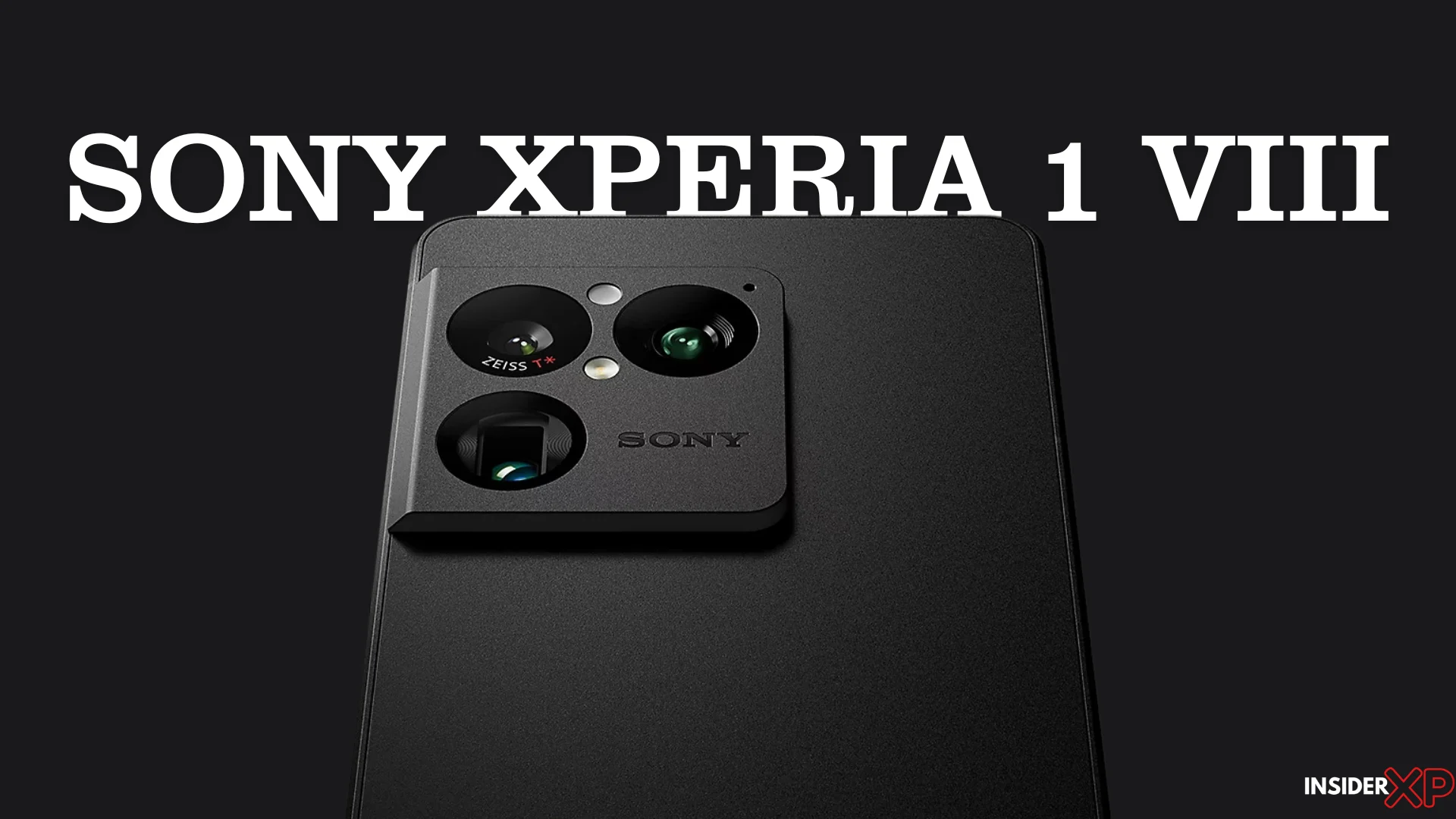
The camera module has been redesigned. It’s more prominent, more structured — closer to what you’d see on a Galaxy Ultra than the understated strips Sony used to favor. Signal or spin? Probably both. The module size suggests real hardware changes underneath. We’ll cover those in the next section.
The big question: does Sony’s 21:9 aspect ratio survive? Based on current renders, yes — but it’s been nudged closer to 20:9. That’s a pragmatic concession. The ultra-tall ratio was always a divisive choice. Great for video. Awkward for everything else. A slight adjustment here is a smart move, not a betrayal.
One-handed usability still won’t be the Xperia’s strong suit. Accept that going in.
Sony’s Camera-First Philosophy — Evolution or More of the Same?
This is where Sony either justifies its price tag or doesn’t.
The Xperia 1 VIII is expected to carry a triple-lens Zeiss-certified system with a larger primary sensor than the VII’s 1/1.35-inch shooter. Rumors point to improved periscope zoom — potentially a 6x optical zoom versus the VII’s 3.5x — and updated Zeiss T* coatings. Real Time Tracking and Eye AF, both inherited from Sony’s Alpha mirrorless lineup, carry over and remain best-in-class for subject tracking (Sony Xperia 1 VII camera features).
InsiderXP Fact: The Sony Xperia 1 VIII is rumored to feature a 6x optical periscope zoom — nearly double the 3.5x optical zoom on the Xperia 1 VII — making it one of the most significant camera hardware upgrades in the Xperia 1 series to date.
Here’s where it gets complicated.
Sony’s camera UI is built for photographers who think in apertures and shutter speeds. If that’s you, there’s genuinely nothing better in a smartphone. The manual controls are deep, the color science is accurate rather than flattering, and the RAW output is exceptional.
But most people — even power users — don’t shoot that way in 2026. Pixel’s Best Take, Apple’s Photonic Engine, and Samsung’s AI-assisted scene optimization produce stunning results with zero setup. Sony’s “accurate” shots often look flat straight out of camera compared to the aggressive computational processing rivals deploy.
Sony is building for a narrowing audience: serious mobile photographers who want a second camera body in their pocket. For everyone else, the gap between “technically correct” and “looks great on Instagram” has never been wider — and it’s working against Sony.
Where Sony Is Winning (And Where It’s Falling Behind)
Where Sony wins, it wins hard.
- Display: 4K OLED at 120Hz is still the benchmark. Nothing else touches it.
- Audio: 3.5mm headphone jack, front-facing stereo speakers, and Hi-Res Audio certification. In 2026, this is a genuinely rare package.
- Build quality: The Xperia line has always been premium glass-and-metal construction. No compromises.
- Form factor: Like it or loathe it, the Xperia’s proportions are distinctive in a sea of identical black slabs.
Where Sony is falling behind, it’s falling noticeably.
- AI integration: Sony has no meaningful answer to Galaxy AI, Gemini on Pixel, or Apple Intelligence. No on-device AI writing tools. No generative editing. No AI-powered call features. The omission feels less principled by the month.
- Ecosystem depth: Google and Apple have years of cross-device integration built up. Samsung has DeX, Galaxy Watch, and SmartThings. Sony has… PlayStation Remote Play. It’s not nothing, but it’s thin.
- Software updates: Sony promises three years of OS updates and four years of security patches. Google and Samsung offer seven years of OS and security updates (Samsung seven-year software support announcement). That delta matters for a $1,300+ device.
Sony’s stubbornness on AI reads as principled when you frame it as “we build for photographers, not chatbot users.” It reads as a liability when your target customer also wants smart features on a phone they’ll carry for three-plus years.
Sony Phone Launch: Pricing, Release Date, and Availability
May 13 is official. Sony confirmed the launch event for this highly anticipated Sony phone launch. What’s officially announced beyond the date is minimal — Sony typically holds Xperia 1 VIII specs and pricing until the day of.
Based on Xperia 1 VII pricing ($1,299 at launch in the US) and general flagship inflation, expect the Xperia 1 VIII to land between $1,299 and $1,399. There’s no credible indication Sony is making a value play here.
Regional availability is a real concern. Sony’s US presence has always been frustrating. The Xperia line remains unlocked-only in the US — no carrier subsidies, no Best Buy financing deals, no hands-on retail experience in most markets. You’re buying direct or through a handful of authorized resellers. For a $1,300+ phone, that’s a significant friction point that Sony has never adequately addressed.
European and Asian markets will get wider availability and potentially better value configurations. If you’re in the US and on the fence, that limited retail footprint should weigh in your decision.
Should You Wait for the Sony Xperia 1 VIII or Buy a Rival Now?
Let’s be direct about the comparison landscape.
Galaxy S25 Ultra is the better all-rounder. AI features, S Pen, exceptional camera versatility, seven-year updates, broad carrier support. If you want one device that does everything well, Samsung has the edge.
Pixel 9 Pro is the smarter choice for AI-first users. Gemini integration is the deepest in the Android ecosystem. The camera computational pipeline is best-in-class for automatic shooting. And it costs $200+ less.
iPhone 16 Pro remains the gold standard for ecosystem integration, video recording, and long-term software support.
Who should wait for the Sony Xperia 1 VIII:
1. Serious mobile photographers who shoot manual and want Alpha-grade controls
2. Audiophiles who refuse to live without a headphone jack on a Sony 2026 flagship
3. Display enthusiasts who genuinely notice and care about 4K on a 6.5-inch panel
Who shouldn’t wait:
1. Anyone who relies on AI features daily — the gap is real and won’t close by the Xperia release date
2. US buyers who want carrier deals or retail availability without jumping through hoops
Frequently Asked Questions
Q1: When is the Sony Xperia 1 VIII release date?
Sony has officially confirmed a May 13, 2026 launch event for the Xperia 1 VIII. This is the date Sony will formally announce full specs and pricing. Units are expected to ship to customers within a few weeks of the launch event, though Sony has not confirmed an exact on-sale date at the time of writing.
Q2: What processor does the Sony Xperia 1 VIII use?
The Sony Xperia 1 VIII is expected to run on the Qualcomm Snapdragon 8 Elite chipset — the same processor found in the Samsung Galaxy S25 series and OnePlus 13. This places it firmly in the top tier of mobile performance for 2026. Leaked configurations suggest a base of 12GB RAM, with 512GB of internal storage available at launch.
Q3: How much will the Sony Xperia 1 VIII cost?
Sony has not officially confirmed pricing ahead of the May 13 launch event. Based on the Xperia 1 VII’s $1,299 US launch price and general flagship price inflation, the Xperia 1 VIII is expected to land between $1,299 and $1,399. Sony has shown no indication of repositioning the Xperia line as a value play.
Q4: Does the Sony Xperia 1 VIII have a headphone jack?
Yes. Based on current pre-launch information and Sony’s consistent hardware philosophy, the Xperia 1 VIII is expected to retain the 3.5mm headphone jack — one of the last flagship smartphones to do so in 2026. It also supports Hi-Res Audio certification and front-facing stereo speakers, making it a standout choice for audiophiles.
Q5: What camera upgrades does the Xperia 1 VIII have over the Xperia 1 VII?
The Xperia 1 VIII is expected to feature a triple-lens Zeiss-certified system with a larger primary sensor than the Xperia 1 VII’s 1/1.35-inch shooter. The most significant upgrade is the periscope zoom, rumored to jump from 3.5x optical on the VII to 6x optical on the VIII. Updated Zeiss T* coatings and carry-over features like Real Time Tracking and Eye AF inherited from Sony’s Alpha mirrorless lineup are also expected.
Q6: Will the Sony Xperia 1 VIII be available in the US?
Yes, but with significant limitations. The Xperia 1 VIII, like its predecessors, is expected to be sold unlocked-only in the United States — meaning no carrier subsidies, no retail financing through networks, and limited in-store availability. Purchases will primarily go through Sony’s website and a small number of authorized resellers. European and Asian markets typically receive broader distribution and more competitive pricing.
Q7: How does the Sony Xperia 1 VIII compare to the Samsung Galaxy S25 Ultra?
The Galaxy S25 Ultra is the stronger all-around flagship for most users. It offers deeper AI integration through Galaxy AI, S Pen functionality, broader carrier support, and seven years of OS and security updates versus Sony’s three. Where the Xperia 1 VIII has the edge is display resolution (4K OLED vs. the S25 Ultra’s QHD+), the presence of a headphone jack, and manual camera controls for serious mobile photographers. For the majority of buyers, the Galaxy S25 Ultra is the more practical choice.
Q8: Does the Sony Xperia 1 VIII support AI features?
Based on everything known ahead of the May 13 launch, the Sony Xperia 1 VIII does not have a meaningful AI feature suite comparable to Samsung’s Galaxy AI, Google’s Gemini integration on Pixel, or Apple Intelligence. Sony has not announced on-device AI writing tools, generative photo editing, or AI-powered call features. This remains one of the most significant gaps between the Xperia 1 VIII and its flagship competitors in 2026.
By the InsiderXP Editorial Team
Sources
- Qualcomm — Snapdragon 8 Elite product page: https://www.qualcomm.com/products/mobile/snapdragon/smartphones/snapdragon-8-series/snapdragon-8-elite
- GSMArena — Display specification comparisons for Galaxy S25 Ultra and Pixel 9 Pro: https://www.gsmarena.com
- Sony — Xperia 1 VII official product page (battery and charging specifications): https://www.sony.com/en/articles/xperia-1-vii
- Sony — Xperia 1 VII camera features, including Real Time Tracking and Eye AF: https://www.sony.com/en/articles/xperia-1-vii-camera-features
- Samsung Newsroom — Seven-year software support announcement: https://news.samsung.com/global/samsung-sets-the-new-standard-with-seven-years-of-mobile-software-support