

For fans of high-stakes spy dramas and adrenaline-charged cinema, Dhurandhar delivers more than just explosive action—it’s a cinematic experience that resonates long after the credits roll. With massive worldwide box office earnings, an almost technical triumph, and stellar performances by Ranveer Singh and Akshay Khanna, Dhurandhar has positioned itself as one of the most talked-about films of 2025. While the compelling storyline weaves a tale of espionage, Dhurandhar is also a powerful emotional journey paired with constant motion; therefore, if you enjoy watching a movie for both its quality of craftsmanship and entertainment value, you will certainly find value in watching this film.
Dhurandhar takes viewers on an intense journey through power and patriotism, following RAW operative Hamza, played by Ranveer Singh, as he attempts to dismantle a terror network. This covert mission evolves into a personal struggle involving loyalty, conscience, and survival. While the film captivates with high-stakes espionage and action, its emotional depth shines through themes of love, betrayal, and sacrifice, creating a balance between thrilling intensity and philosophical reflection that blurs the lines between heroism and manipulation.
Cast & Performances
Ranveer Singh: The Pulse of Dhurandhar
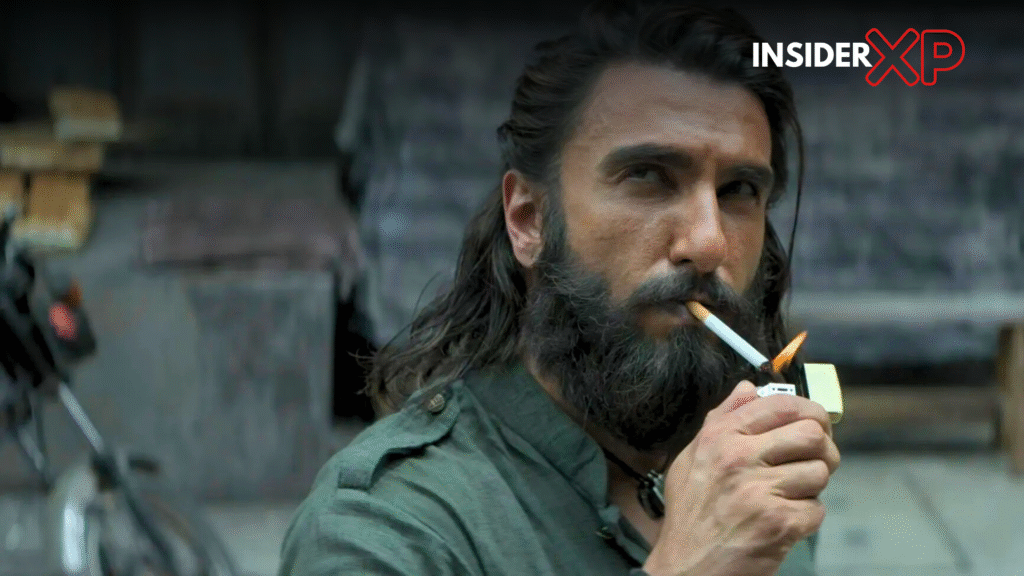
In Dhurandhar, Ranveer Singh delivers one of the most controlled and commanding performances of his career. His portrayal of RAW agent Hamza is a masterclass in restraint and emotional balance. Hamza isn’t your typical Bollywood action hero—he’s complex, flawed, and deeply human. Torn between national duty and his inner demons, Ranveer crafts a character whose silence speaks as loudly as his rage. Each frame radiates his signature energy, but this time it’s tempered with quiet pain and psychological depth. Whether navigating explosive chases or subtle confrontations, Ranveer Singh anchors Dhurandhar with charisma and rare emotional intelligence, proving yet again that he thrives on roles that challenge convention.
Akshay Khanna in Dhurandhar: The Shadow That Lingers
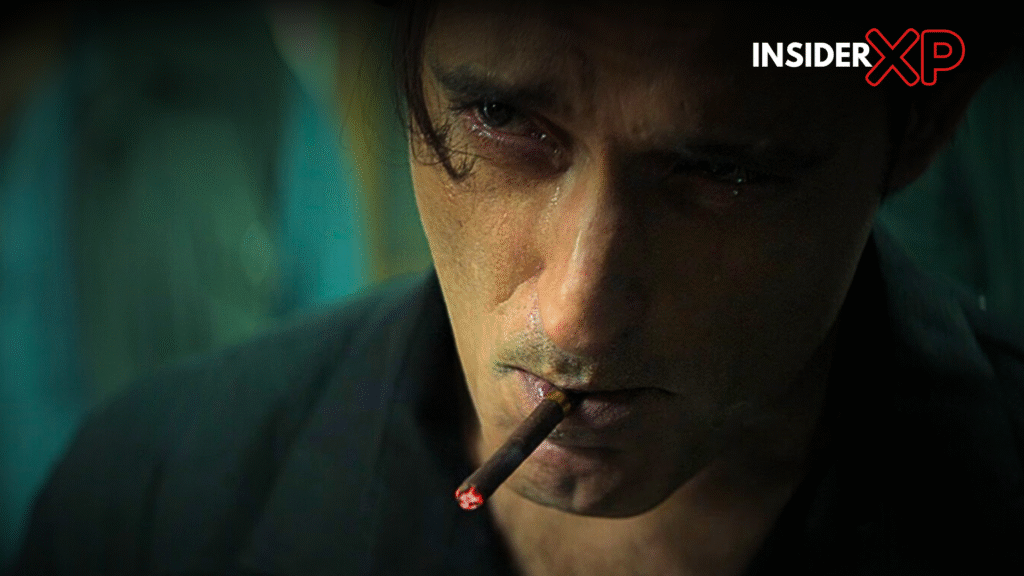
Opposite him, Akshay Khanna in Dhurandhar plays the enigmatic Rehman Dakait—a villain who redefines menace. Khanna’s performance is chilling in its precision; his calm delivery and piercing gaze exude power without ever raising a voice. There’s a haunting grace to his villainy, giving Dhurandhar a Shakespearean undertone of tragedy and moral ambiguity. The tense psychological duel between Ranveer Singh and Akshay Khanna in Dhurandhar forms the emotional and narrative backbone of the film, producing several of its most unforgettable scenes. Their chemistry—rooted in intellect rather than theatrics—keeps the audience riveted until the final frame.
The Supporting Ensemble: A Solid Backbone
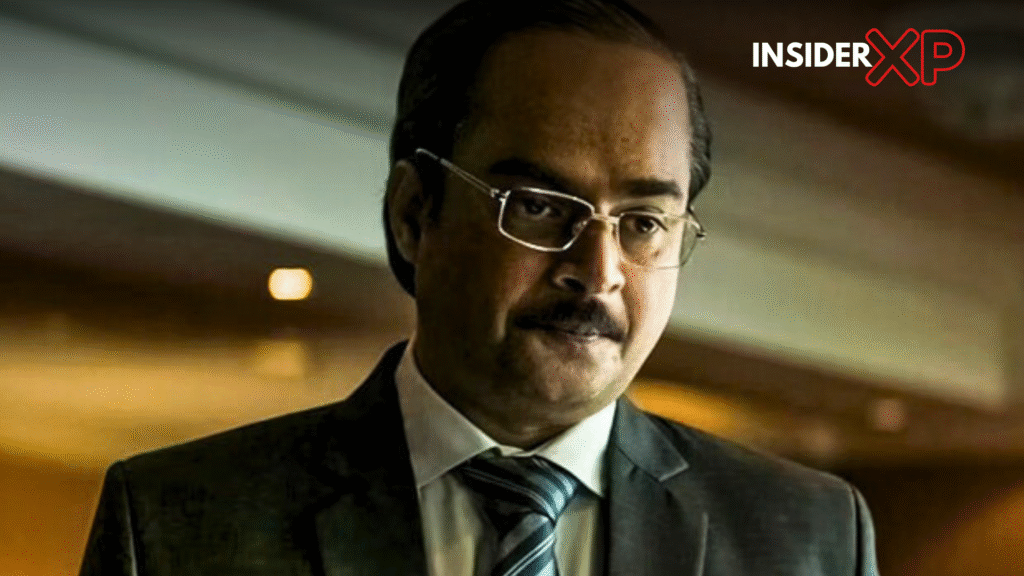
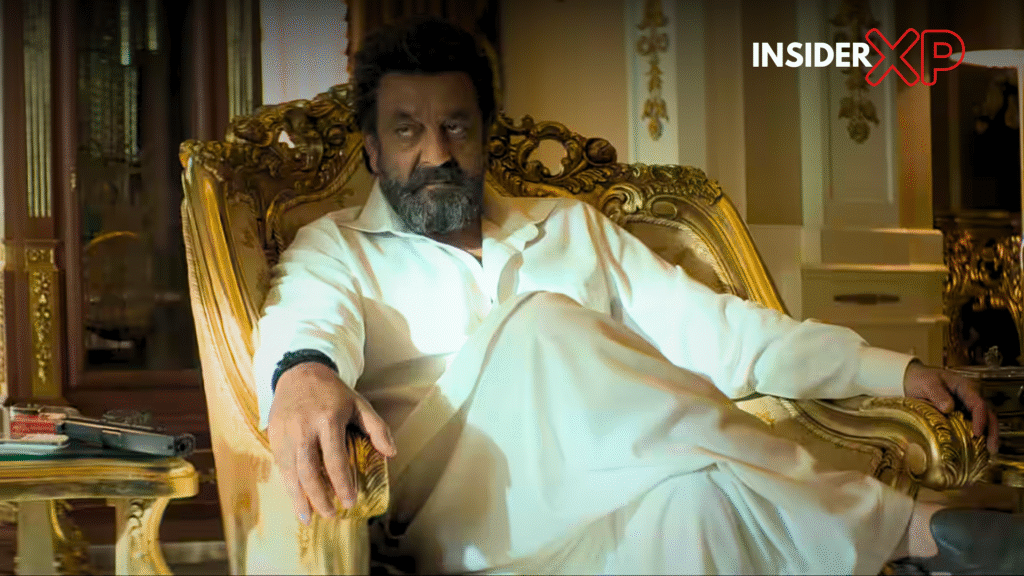
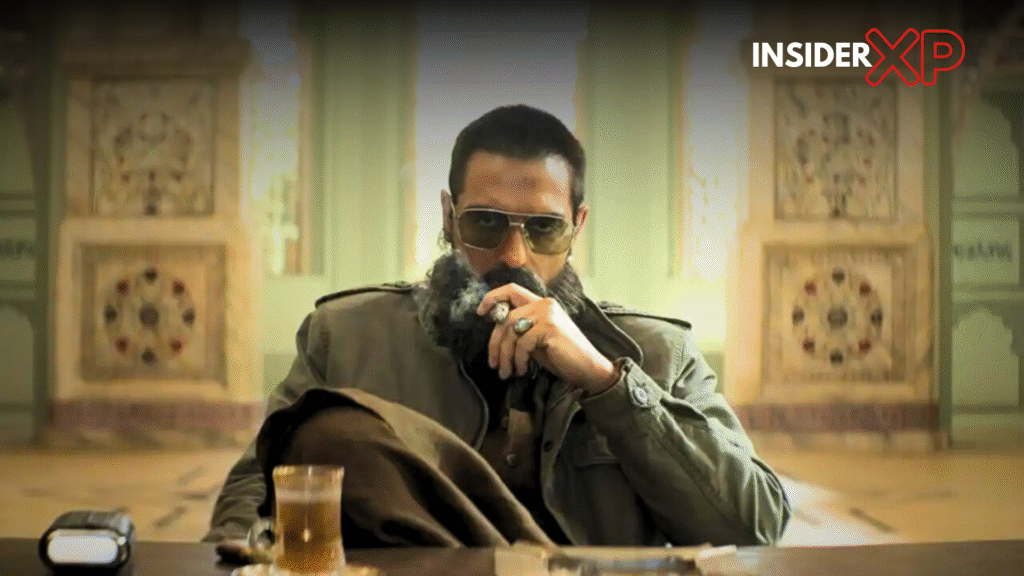
Adding further depth to Dhurandhar is its robust supporting cast. R. Madhavan shines as a morally conflicted intelligence officer, delivering a layered performance that blurs the line between loyalty and betrayal. Arjun Rampal brings rugged authenticity to his role as Hamza’s field mentor, while Sanjay Dutt leaves a lasting impression with a brief yet pivotal appearance in the second act—his presence alone amplifying the film’s emotional gravitas. Together, this ensemble ensures Dhurandhar feels both large-scale and deeply personal, grounded in character even amid chaos.
Direction & Cinematography
Director Aditya Dhar orchestrates Dhurandhar with remarkable precision, passion, and a filmmaker’s instinct for balance. His mastery over tone ensures the movie never slips into melodrama despite its grandeur and emotional heft. Dhar treats Dhurandhar not merely as a spy thriller but as an immersive visual experience — one that pulses with tension and humanity in equal measure.
Visually, Dhurandhar is a breathtaking achievement. Every frame feels cinematic, alive with intent and mood. From the dusky borderlands of Kashmir to neon-lit safe houses in Istanbul, Dhar and cinematographer Tushar Kanti Ray compose imagery that lingers long after the credits roll. Ray uses color as emotion — warm, sun-drenched hues to symbolize the homeland and icy blue tones to evoke isolation during foreign operations. This sharp visual contrast reinforces Hamza’s emotional conflict, mirroring the duality that defines the film.
The chase sequences, particularly the heart-stopping Istanbul pursuit, are choreographed with exhilarating precision. The sweeping drone shots and dynamic tracking angles transform action into visual poetry, while moments of stillness remind viewers of the humanity beneath the chaos. Together, Dhar and Ray elevate Dhurandhar beyond spectacle—turning it into a work of art that’s both thrilling and deeply atmospheric.
Screenplay & Writing
The screenplay, co-written by Aditya Dhar and Ritesh Shah, is the beating heart of Dhurandhar. It weaves a labyrinthine story filled with secrets, shifting loyalties, and emotional landmines — yet it never loses sight of its narrative purpose. The writing balances intelligence with accessibility, giving Dhurandhar the rare ability to satisfy both serious cinephiles and mainstream audiences.
The first act carefully builds intrigue, setting up a world of espionage that feels authentic and immediate. By the second act, the focus shifts inward, deepening the emotional and psychological conflicts between the characters — especially between Ranveer Singh’s haunted Hamza and Akshay Khanna in Dhurandhar as the enigmatic Rehman Dakait. Their dialogue exchanges are razor-sharp, often philosophical, and loaded with subtext, transforming confrontation into conversation and strategy into emotion.
As the story progresses, the screenplay tightens its grip, leading to a third act that detonates with moral ambiguity and emotional catharsis. While the pacing occasionally slows, it serves the film’s intent — allowing the characters room to evolve, to reveal their fears, and to question the very nature of duty and truth. Dhar and Shah’s writing proves that Dhurandhar isn’t just an action spectacle; it’s a study in human complexity, framed within the high-stakes world of espionage.
Music & Sound Design
The music of Dhurandhar, composed by Pritam, perfectly mirrors the film’s shifting emotional gears — gliding effortlessly between soulful melancholy and pulse-pounding intensity. Every note feels like an echo of Hamza’s inner turmoil, giving Dhurandhar a powerful musical identity. The standout track, “Watan Meri Zameen,” unfolds like a modern patriotic anthem, swelling with orchestral grandeur and stirring emotion. Its haunting melody lingers long after the film ends, resonating with the themes of love, loss, and sacrifice that define the story.
The background score by Julius Packiam is equally masterful, amplifying the tension in every frame. From the rhythmic thrum of covert operations to the unsettling silence that precedes an explosion, his soundscape keeps audiences on edge. The meticulous layering of gunfire echoes, coded transmissions, and whispered confessions in interrogation rooms adds an immersive realism that makes Dhurandhar feel alive.
Together, Pritam and Packiam craft an auditory experience that goes beyond mere accompaniment — it becomes the emotional pulse of the film. The sound design doesn’t just heighten suspense; it communicates what words cannot, reminding viewers that in Dhurandhar, silence can be as powerful as a symphony.
Cinematic Masterstroke: The Defining Moment of Dhurandhar
The scene that truly defines Dhurandhar arrives midway through the film — a breathtaking ten-minute interrogation sequence captured in a single, unbroken take. Inside a mirrored chamber, Ranveer Singh’s Hamza confronts both his captive and his conscience, blurring the line between interrogation and introspection. As the camera glides in slow rotation, reflections multiply, and the audience feels trapped in Hamza’s fractured psyche.
Akshay Khanna’s Entry: The Calm Before the Storm in Dhurandhar
Few Bollywood actors can command the screen with silence the way Akshay Khanna in Dhurandhar does — and his entry scene is proof. His first appearance, set against the shadowy backdrop of a war-torn port city, unfolds like a slow burn of menace and elegance. The camera follows him through narrow alleys as he walks toward a dimly lit warehouse, his face half-obscured by smoke and moonlight. No background score, no dramatic dialogue — just the eerie sound of his footsteps echoing through the night.
When he finally speaks, the moment feels volcanic despite the quiet delivery. In a few measured words, Rehman Dakait establishes himself not just as a villain but as an intellectual force — a strategist who manipulates systems as easily as he manipulates emotions. It’s an entrance that lingers, drawing audiences into his psychological orbit. From that point onward, every interaction between Ranveer Singh and Akshay Khanna in Dhurandhar becomes a battle of wits and will — a dance between two men who are more alike than they’d ever admit.
The Painful Heart of Dhurandhar: Remembering 26/11
One of the film’s most gut-wrenching moments comes during Hamza’s emotional breakdown while watching the 26/11 Mumbai attacks unfold live on surveillance feeds. The scene is shot with documentary-like realism — no background music, no cinematic exaggeration. Just chaos, fear, and the cold light of computer monitors reflecting in Hamza’s eyes.
Ranveer Singh’s restrained performance here is devastating. He doesn’t cry or shout; instead, his trembling hands and hollow stare tell the story of a man witnessing his worst nightmare — helpless yet accountable. The sequence doesn’t just reference a historical tragedy; it anchors Dhurandhar in a collective national trauma, connecting personal guilt to public grief.
Aditya Dhar’s direction ensures that this scene never feels exploitative. Instead, it becomes a haunting reminder of why Hamza fights — and what’s at stake when duty collides with humanity. The silence after the footage cuts is deafening, forcing both the protagonist and the audience to confront the cost of patriotism and loss.
Themes & Symbolism
At its core, Dhurandhar is a study in duality — loyalty versus morality, truth versus illusion, and nation versus self. The film constantly challenges the audience to question what it means to be a patriot in a world built on deception. Every choice the characters make is shadowed by consequence, revealing that even acts of heroism carry invisible scars.
The recurring motif of mirrors becomes a powerful visual metaphor throughout Dhurandhar. Each reflection captures not who the characters are, but who they fear to become. When Hamza, played by Ranveer Singh, faces his own reflection during the interrogation sequence, it’s more than a visual flourish — it’s the film’s philosophical spine. In that moment, Dhurandhar transforms from an espionage drama into a meditation on identity, guilt, and redemption.
Even the title itself, Dhurandhar — meaning “strategist” or “mastermind” — carries layered symbolism. It refers not only to the world of intelligence and covert operations but also to the strategies people create to survive emotional warfare. Every character, including Akshay Khanna in Dhurandhar, hides behind a mask of purpose, using intellect as armor against vulnerability.
Through these themes, Dhurandhar rises beyond the framework of a conventional spy thriller. It becomes a sharp commentary on the modern nation-state, exploring how individuals navigate power, loyalty, and self-preservation in systems that demand obedience. Ultimately, it reminds viewers that the greatest espionage isn’t between nations — it’s the war within one’s own conscience.
Audience Recommendation
Dhurandhar is tailor-made for fans of intense, layered spy thrillers like Raazi, Madras Café, and Pathaan. It’s a treat for audiences who value strong performances and narrative depth over popcorn spectacle. Serious cinephiles will admire its craft, while casual viewers will be gripped by its tension and grandeur.
Dhurandhar is an event film—a daring, emotionally intelligent thriller that blends the pulse of mainstream Bollywood with the depth of world cinema. Ranveer Singh delivers a performance that defines his career, while Akshay Khanna in Dhurandhar crafts one of the most memorable villains in recent memory. Aditya Dhar’s direction turns espionage into emotion and action into poetry. Dhurandhar is not just a film; it’s a cinematic statement — one that will shape how Bollywood approaches the spy genre for years to come.
With Dhurandhar 2 officially announced for 2026, excitement is soaring. Sources confirm that Ranveer Singh will reprise his role in a darker, more psychological sequel that delves into the aftermath of Hamza’s decisions. Rumors also suggest that Akshay Khanna in Dhurandhar 2 might return in flashback sequences or as a haunting memory, symbolizing unfinished business. Expect the sequel to expand globally, introducing new spy networks and even higher emotional stakes.
“For more in-depth analyses of Bollywood thrillers and character-driven dramas, check out our comprehensive reviews and film breakdowns.