For those who live for cinematic puzzles, grand spectacles, and that exhilarating “how did they do that?” moment, Now You See Me: Now You Don’t is a return to the kind of blockbuster storytelling that values both the mind and the imagination. The Now You See Me franchise has always been more than a heist saga—it’s a celebration of cleverness, charisma, and the timeless allure of deception.
In this new chapter, the stakes are higher, the tricks are bolder, and the narrative is sharper. It’s not just about watching a performance—it’s about being part of one. Audiences around the world have long been fascinated by the way Now You See Me blends classic sleight of hand with modern technology, and this film delivers that mix with renewed energy.
Where the first two installments introduced us to the world of illusionists turned vigilantes, Now You See Me: Now You Don’t brings the franchise into emotionally mature territory—exploring what happens when magicians themselves start questioning the difference between illusion and truth.
A Spellbinding Synopsis (Spoiler-Free)
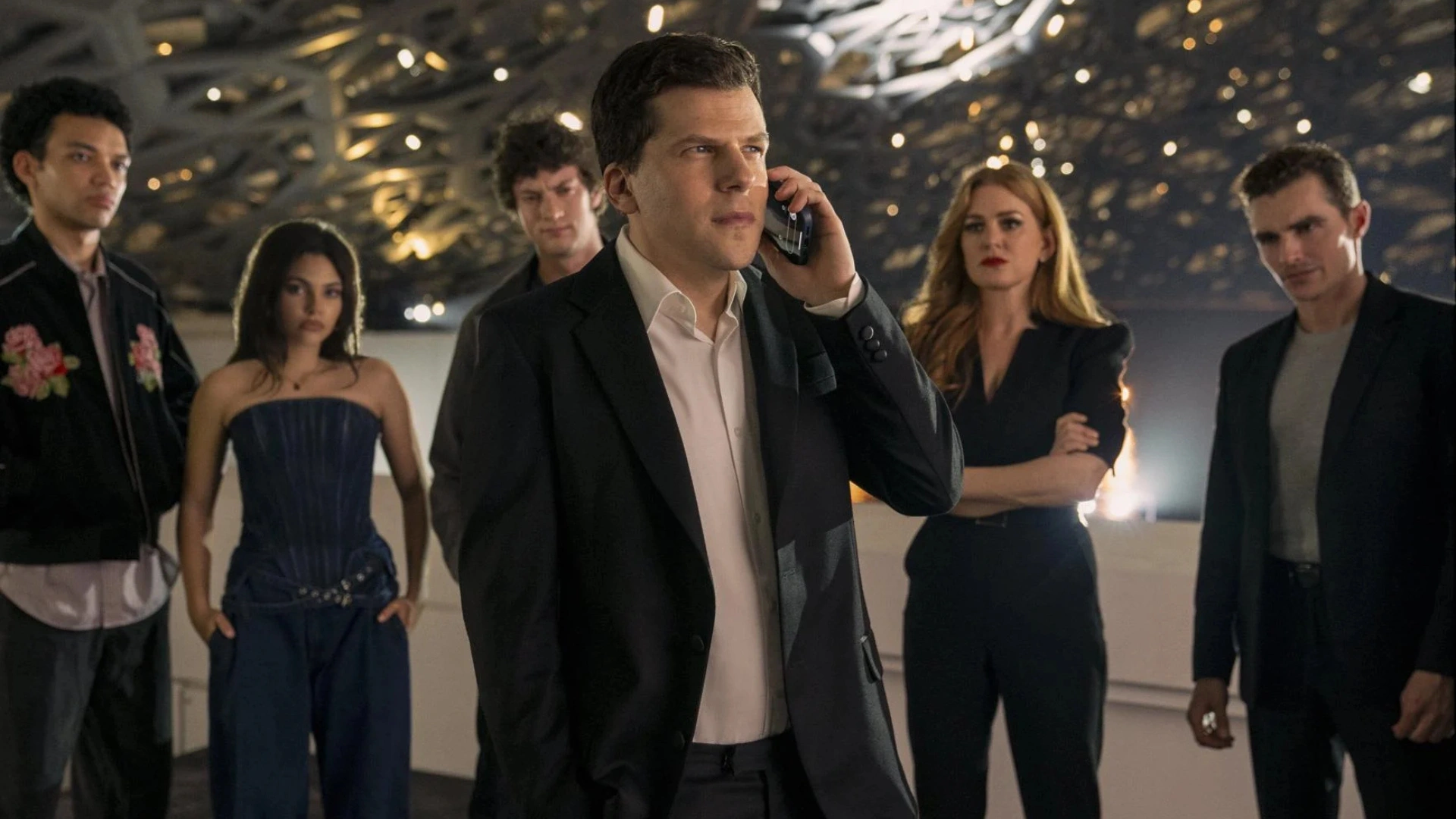
The Horsemen are back, and this time, they’re not just fighting to expose corruption—they’re fighting to protect the very magic that defines them. Led by Daniel Atlas (Jesse Eisenberg) and the unpredictable Merritt McKinney (Woody Harrelson), the team is pulled into a web of deception that stretches across continents and challenges everything they know about their secret organization, The Eye.
Set against a global backdrop of glittering cities—from the neon pulse of Tokyo to the cobbled alleys of Venice—the film explores the limits of loyalty and the dangers of belief. Each new illusion is more daring than the last, and every twist pulls the audience deeper into the enigma.
Now You See Me: Now You Don’t remains true to the franchise’s DNA: smart, slick, and full of surprises. Yet it also dares to slow down and let its characters breathe, revealing their vulnerabilities beneath the flair and flash.
Cast & Performances – The Horsemen Ride Again
One of the franchise’s biggest strengths has always been its ensemble cast, and here, they perform like a well-practiced illusion—each member essential to the trick’s success.

Jesse Eisenberg returns as Daniel Atlas, the brilliant but tightly wound magician whose perfectionism often borders on obsession. Eisenberg gives one of his most layered performances, balancing his signature quick wit with flashes of insecurity. His internal battle—between control and chaos—becomes a fascinating thread throughout the movie.
Woody Harrelson once again delivers double the fun as both Merritt McKinney and his mischievous twin brother, Chase. The duality of his performance is remarkable: Harrelson manages to be hilarious, unhinged, and deeply human, often within the same scene.
Lizzy Caplan shines as Lula May, bringing sharp humor and emotional grounding to the group. Her chemistry with Dave Franco’s Jack Wilder is natural and endearing—their rapport adds levity amidst the cerebral chaos.
The supporting cast features a few exciting newcomers who hint at where Now You See Me 3 might lead, expanding The Eye’s mysterious legacy. The balance between old faces and new intrigue keeps the ensemble dynamic and engaging.
Direction & Cinematography—The Illusion in Motion
Director Jon M. Chu (of Crazy Rich Asians and In the Heights) brings his signature energy and visual rhythm to Now You See Me: Now You Don’t. Every scene feels choreographed—not just in movement but in meaning. The film’s pacing mirrors a magician’s act: slow build-up, misdirection, and a dazzling reveal.
Cinematographer Peter Deming transforms each location into a stage of wonder. Sweeping drone shots glide through skylines, while intimate close-ups draw attention to the characters’ inner tension. The recurring motif of mirrors and reflections is especially clever, reinforcing the film’s core question: What is real when everything we see is designed to deceive?
From the shimmer of a disappearing act to the shimmer in Eisenberg’s intense gaze, the visuals maintain a hypnotic consistency. It’s proof that blockbuster filmmaking can still be beautiful when it dares to be intelligent.
Screenplay & Writing—A Dance Between Logic and Illusion
The screenplay, co-written by Ed Solomon and Steven Knight, achieves what few sequels manage—it deepens the mythos without overcomplicating it. The dialogue is crisp, layered with humor and psychological insight. Characters don’t just explain the plot; they challenge one another’s motives, forcing audiences to question who’s really pulling the strings.
Where Now You See Me 2 sometimes leaned too heavily on spectacle, Now You See Me: Now You Don’t strikes a stronger balance between emotional storytelling and narrative misdirection. The writers ensure that every trick serves the story, not the other way around.
The film also introduces a clever meta-layer—many of its illusions mirror the filmmaking process itself. Just as magicians control what the audience sees, filmmakers control perspective. It’s a subtle but rewarding commentary on the art of storytelling.
The Most Memorable Scene—A Symphony of Smoke and Mirrors
The film’s showstopper arrives during a tense mid-act sequence set in Venice, where the Horsemen stage an illusion at a masquerade ball. Surrounded by shimmering reflections and masked spectators, they execute a breathtaking “vanishing act” involving holographic projections and optical illusions that transform the entire ballroom into a mirage.
This isn’t just visual spectacle—it’s emotional storytelling. The sequence reflects the theme of identity and disguise, blurring lines between illusion and self. Chu’s direction, combined with Deming’s lighting and Tyler’s score, crafts a scene that feels both intimate and grand—cinema’s equivalent of a standing ovation.
Themes & Messages—The Morality of Illusion
Beneath the glamour and grand tricks, Now You See Me: Now You Don’t explores profound ideas: truth, control, and the nature of belief. The film asks—if perception can be manipulated, can truth ever be trusted?
It delves into the psychology of performance—how illusionists, like storytellers, walk the fine line between deception and revelation. Each character wrestles with identity: are they heroes, frauds, or something in between?
The message is clear: Magic isn’t about lying—it’s about making people believe in something extraordinary. It’s a theme that resonates far beyond the screen.
Comparisons & Context—Building the Legacy
When Now You See Me debuted in 2013, it redefined the modern heist film by fusing magic with mystery. Its 2016 sequel, Now You See Me 2, expanded that world, but some critics felt it traded depth for dazzle.
Now You See Me: Now You Don’t corrects that course. It feels more grounded and more emotionally aware while still delivering the flair fans expect. This evolution suggests that the creative team has truly listened to its audience.
And with Now You See Me 3 already in development, this installment functions beautifully as both a standalone story and a bridge—teasing deeper layers of The Eye and perhaps a darker side to the magic.
Overall Impact & Personal Opinion
What makes Now You See Me so enduring is its balance of brains and beauty. Now You See Me: Now You Don’t honors that legacy while growing in sophistication. It’s fun, smart, and unapologetically theatrical—a film that rewards both casual viewers and cinephiles.
Jesse Eisenberg and Woody Harrelson anchor the narrative with performances that blend intellect and instinct. The direction is sleek, the cinematography painterly, and the script razor-sharp. It’s everything a modern blockbuster should aspire to be—entertaining yet thoughtful, thrilling yet meaningful.
Audience Recommendation
This film is tailor-made for lovers of high-concept entertainment—the kind who appreciate the mind games of Inception, the artistry of The Prestige, and the humor of Ocean’s Eleven.
Whether you’re drawn by the clever heists, the visual wizardry, or the pure charisma of its cast, Now You See Me: Now You Don’t delivers on every front. It’s a cinematic experience that invites you not just to watch but to participate in the illusion.
In its latest chapter, Now You See Me: Now You Don’t proves that the Now You See Me franchise still has plenty of tricks up its sleeve. It’s a film that captures the wonder of illusion and the intelligence of cinema, reaffirming why audiences worldwide continue to be enchanted.
As anticipation builds for Now You See Me 3, one thing is certain—the Horsemen have mastered the rarest illusion of all: keeping their magic alive in a world that’s seen it all.
🎥 Check out our other movie review blogs for more in-depth insights, honest critiques, and expert recommendations on the latest Hollywood and international releases.